.svg)
.svg)
.svg)


%202.svg)
How to Build a Capital Expenditure Plan for Your Commercial Roof
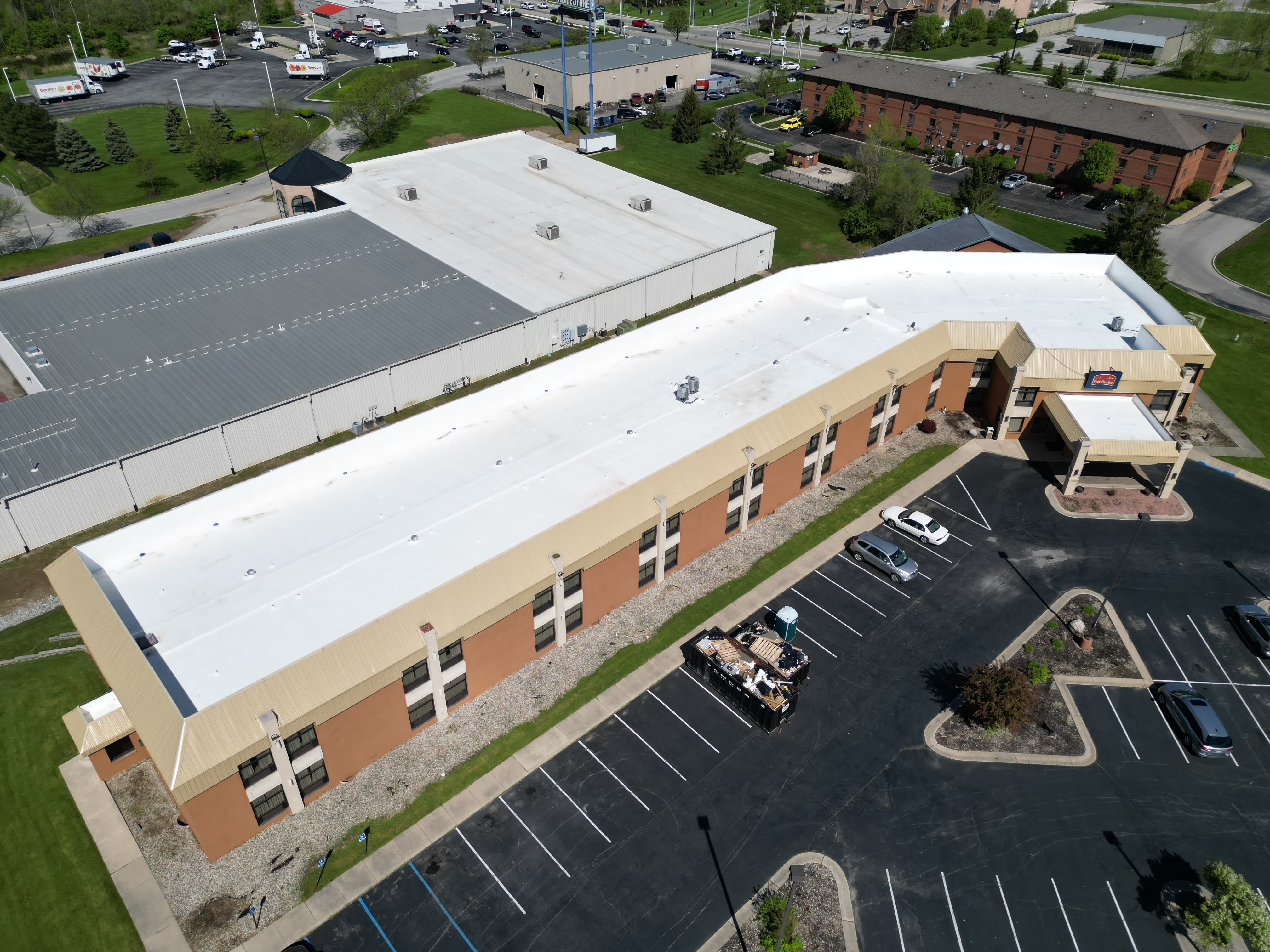
Budget season arrives before most property managers feel ready for it. Q4 planning starts in August for a lot of commercial operators, and the roof, one of the largest capital assets on any building, often gets addressed reactively rather than planned for. A leak gets repaired, the repair gets expensed, and the underlying question of when the roof needs to be replaced stays unanswered until it becomes urgent.
Building a capital expenditure plan for a commercial roof isn't complicated, but it does require specific information that most property managers don't have unless they've had a professional assessment done. Here's how to build one.
Start With Remaining Useful Life
The first number you need is an estimate of how much service life the current roof has left. This isn't a guess; it's derived from three things: the roof's age, the type of system, and its current condition.
Most commercial flat roof systems have a design life in the 15 to 25 year range depending on the membrane type and how well the roof has been maintained. A 12-year-old TPO membrane that has been regularly inspected and had minor repairs addressed promptly is a different asset than a 12-year-old membrane that has been patched repeatedly without a professional assessment.
Age alone doesn't tell you enough. A professional inspection translates the physical condition of the roof into a remaining useful life estimate, something you can actually put into a spreadsheet and plan around. Without that number, you're guessing.
What a Professional Inspection Actually Gives You
A thorough commercial roof inspection produces a written report with photos. That document is the foundation of any credible capital plan. It tells you:
- Which areas of the roof are in good condition and require only routine maintenance
- Which areas have active issues that need attention before the next budget cycle
- Which sections are approaching end of life and should be flagged for replacement planning
- An estimated timeline for when major capital expenditure will be required
That last point is the one that matters most for budget purposes. A written assessment that says "this roof has an estimated 4 to 6 years of remaining useful life" gives you a planning window. You can start building reserves, get replacement bids into the capital plan, and avoid the significantly higher cost of emergency replacement on a compressed timeline.
Landmark's commercial inspection reports are written specifically to support this kind of planning conversation not just to document problems, but to give you a condition baseline with timeline context.
Maintenance vs. Capital: Getting the Categories Right
How roofing costs are categorized affects both the budget conversation and, in some cases, the tax treatment. The distinction matters.
Routine maintenance clearing drains, resealing flashings, patching isolated damage, annual inspections is an operating expense. It preserves the existing asset and extends its life, but it doesn't add value or extend the asset's useful life beyond its original expectation. These costs belong in the maintenance line of an operating budget.
Capital replacement removing and replacing the roofing system, or installing a new system over the existing one is a capital expenditure. It creates or restores a long-term asset and is typically depreciated over the life of the new system. This belongs in the capital budget, not the maintenance budget, and it requires a different approval process in most organizations.
The line between the two can blur. A large-scale repair that restores a failed section of membrane and meaningfully extends the roof's remaining useful life may qualify as a capital expenditure rather than a maintenance expense. This is worth discussing with your accountant or CFO when the numbers are significant, but the professional inspection report gives you the documentation to support that conversation.
How to Present This to a Board or Ownership Group
Roof condition is abstract until it has a number attached to it. A board or ownership group that hears "the roof is getting old" doesn't have what they need to make a capital decision. A board that hears "the roof has an estimated 3 to 5 years of remaining useful life, replacement is projected at $X, and we recommend beginning to reserve $Y annually starting now" can act on that.
The professional inspection report is what converts the abstract into the specific. Photos of membrane condition, documented seam issues, a written assessment of each roof section, and a timeline all of that gives ownership something concrete to evaluate. It also protects the property manager: a capital request backed by third-party documentation is harder to defer indefinitely than one based on a verbal assessment.
When presenting to a board, a few things help:
- Lead with the risk, not the cost. A roof failure during peak occupancy, a tenant lease dispute over water intrusion, or interior damage to inventory or equipment all carry costs that dwarf routine replacement. Frame the capital request in terms of what deferred action costs, not just what replacement costs.
- Show the planning window. If the roof has 4 years of remaining useful life, the board has options to fund replacement now, begin reserving immediately, or plan a phased approach. If you bring it to them in year 3 as an emergency, those options are gone.
- Attach the inspection report. Third-party documentation shifts the conversation from opinion to evidence. A board that can read a professional assessment and look at condition photos is better positioned to approve a capital request than one being asked to take a property manager's word for it.
Building the Reserve Estimate
Once you have a remaining useful life estimate and a rough replacement cost, the reserve calculation is straightforward. Divide the estimated replacement cost by the number of years remaining in the planning window. That's the annual reserve contribution needed to fund the replacement without a lump-sum capital call.
For a building with a $180,000 roof replacement projected in 6 years, that's $30,000 per year in reserve contributions. Started early, that's a manageable line item. Deferred until year 5, it's a compressed problem.
Replacement cost estimates vary by building size, roof complexity, membrane type, and whether a tear-off is required. A professional inspection can give you a rough replacement range alongside the condition assessment, which is enough to start the reserve planning conversation.
The First Step
A capital plan for a commercial roof starts with a professional inspection and a written report. Everything else: the timeline, the reserve estimate, the board presentation depends on having that document in hand.
Landmark offers free commercial roof inspections and written condition reports. If your roof is within 10 years of its expected end of life, or if you're heading into a budget cycle without a current assessment, now is a practical time to get one done.

.avif)


